The Logical/deductive Problem of Evil Is Best Described as
Logicaldeductive Evidentialinductive Logical Problem of evil. The problem of evil is the reconciliation between the existence of suffering and evil in the world with an omnipotent all powerful omniscient allknowing and omnibenevolent infinitely kind GOD.

The Logical And Evidential Problem Of Evil 1
The logical or deductive argument claims that the fact of evil is logically incompatible with the existence of an omniscient omnipotent wholly good God.

. The theistic answer to the deductive problem of evil is based on the claim that it is possible that God has a good reason for all of the evil He allows. The problem of evil is the question of how to reconcile the existence of evil and suffering with an omnipotent omnibenevolent and omniscient God. The deductive form of the problem asks the following.
Now one might say that that seems pretty unlikely. Logical problem of evil First it can be formulated as a purely deductive argument logical version of the argument that attempts to show that there are certain facts about the evil in the world that are logically incompatible with the existence of God. One of the major philosophical debates concerning Gods existence involves the problem of evil.
Is the existence of evil logically compatible with a necessarily benevolent and. The Problem of Evil - Part 2. But then one would be confusing once again the logical problem of evil with the probabilistic problem of evil.
May I go on to explain why certain elements in. It does so by producing a new problem entirely distinct from the old problem of Epicurus Hume and Mackie which was so influentially addressed by Plantinga. Either as a deductive argument or as an inductive argument.
The existence of evil poses both a logical and empirical problem for theism forming the basis of both a deductive argument that attempts to deduce a contradiction from the existence of both God and evil and an inductive argument that contends that it is improbable that God is the creator of a world that contains the amount and kinds of evils found in this one. 221 Good cannot exist without evil since evil is necessary as a counterpart to good. For example someone who raises the problem of evil may be referring to the religiousemotional problem of evil the logical problem of evil the evidential problem of evil moral evil or natural evil just to name a few.
Alternatively rather than being formulated as a deductive argument for the very strong claim that it is logically impossible for both God and evil to exist or for God and certain types or instances or a certain amount of evil to exist the argument from evil can instead be formulated as an evidential or inductiveprobabilistic argument for the more modest claim. The logical problem of evil can then be cast as a deductive argument from the premise that evil does in fact exist to the conclusion that the God of traditional theism omnipotent omniscient perfectly good does not exist. If God is able to prevent evil but not willing then he is melevolent 3.
Premise 3- Evil exists. Is God willing to prevent evil but not able then he is not omnipotent 2. The phrase problem of evil can be used to refer to a host of different dilemmas arising over the issue of God and evil.
The problem has two basic formulations one is deductive the other inductive. The logical version of the problem of evil also known as the a priori version and the deductive version is the problem of removing an alleged logical inconsistency between certain claims about God and certain claims about evil. Assessing the claim that the traditional concept of God and the existence of evil are logically contradictory.
I am sincerely grateful for your taking the time to consider what I wrote to you. 2 Solutions to the problem of evil. Thank you very much for your response to my questions regarding the problem of evil.
The evidential or inductive argument claims that while at least some evil is logically compatible with the existence of God the amount and diversity of evil that exists constitutes evidence against the existence of God making. 222 Evil is necessary as a means to bringing about goodness. Mackie argued that the following two statements are logically contradictory.
The problem of evil refers to the question of how to reconcile the existence of evil with an omnibenevolent omniscient and omnipotent God see theism. The Deductive Problem of Evil. Dont these explanations wear thin when we confront the suffering of an innocent child.
The evidential problem of evil takes up a different question. This chapter shows that the logical problem of evil is far from dead. The logical problem can be contrasted with the evidential problem of evil which does not claim that just any evil would be inconsistent with God but that the.
224 Evil is necessary for. An argument from evil attempts to show that the co-existence of evil and such a God is unlikely or impossible. It was popularized by David Hume.
As an example a critic of Plantingas idea of a mighty nonhuman spirit causing natural evils may concede that the. The evidential version of the problem of evil also referred to as the probabilistic or inductive version seeks to show that the existence of evil although logically consistent with the existence of God counts against or lowers the probability of the truth of theism. To refute the logical version of the internal problem of evil the theist does not have to suggest a plausible or likely solution-all he has to do is suggest a possible one.
Attempts to show the contrary have traditionally been discussed under the heading of theodicy. 223 A universe with some evil is better than a universe with none. The theistic claims utilized by the new problem are claims about Gods unsurpassable greatness ontological.
If it is possible that God has a sufficient reason the deductive argument is defeated. There are currently differing definitions of these concepts. Premise 2- God is all-good.
The best known presentation of the problem is attributed to the Greek philosopher Epicurus. Premise 1- God is all-powerful. The Deductive Problem of Evil.
Broadly speaking the problem of evil can be formulated in two ways. Greek philosopher Epicurus defined the problem of evil in the quote. Perhaps the most well-known example of the former comes from the late Australian philosopher John L.
Religious philosophers have tried to show ways in which the presence of suffering could be compatible with the existence of an all-powerful loving God. But does it seem that even the best responses to the problem of evil turn out to be less than conclusive.

What Is The Logical Problem Of Evil Identified By Epicurus Page 4 Ppt Download

What Is The Logical Problem Of Evil Identified By Epicurus Page 4 Ppt Download
The Problem Of Evil The Logical Problem Epicurus Greek Philosopher Who Founded The Epicurean School Of Philosophy In Athens Epicurus Formulation Of Ppt Download
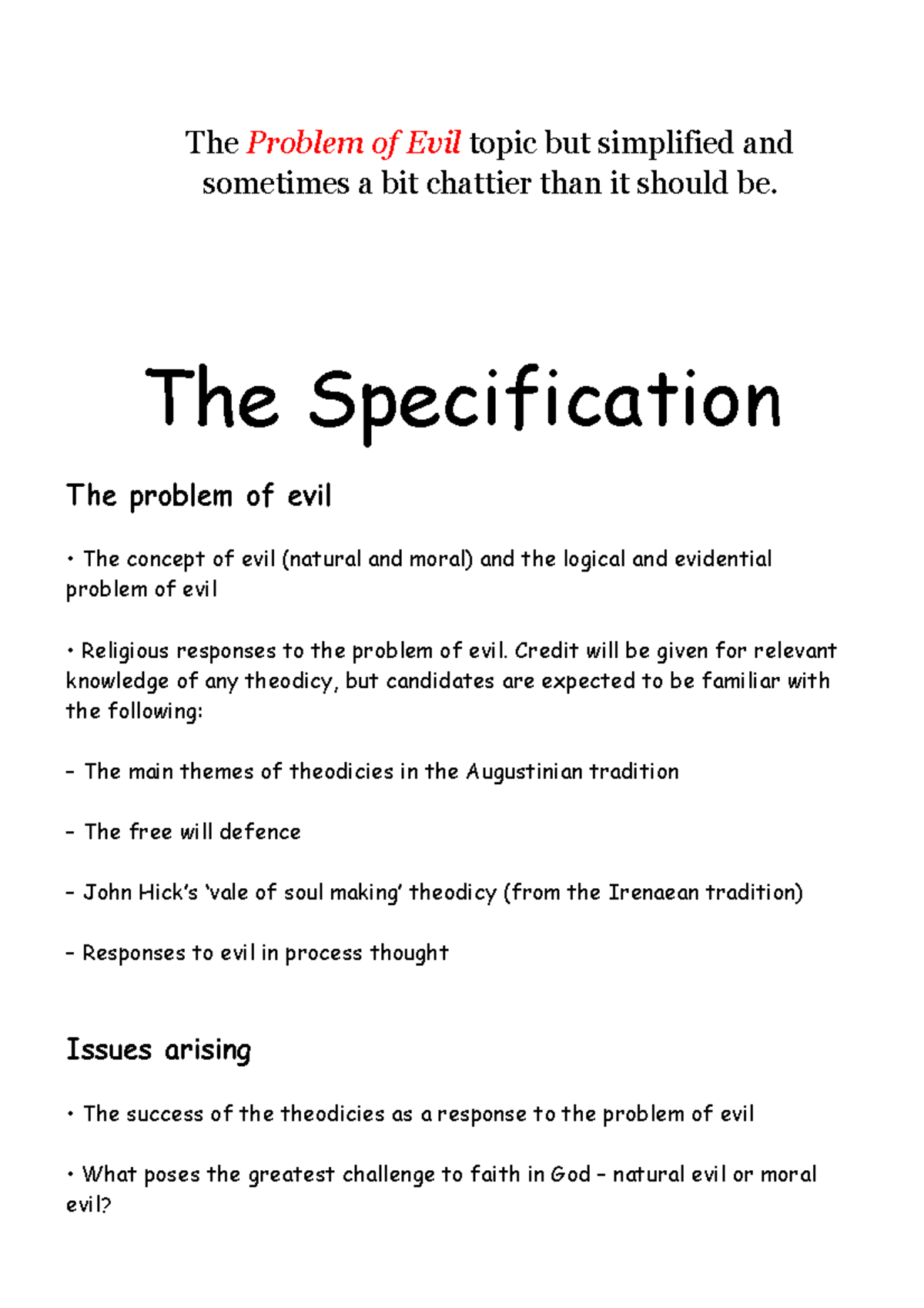
The Problem Of Evil Revision Guide 2 Ph368 Warwick Studocu

The Evidential Problem Of Evil Ppt Download
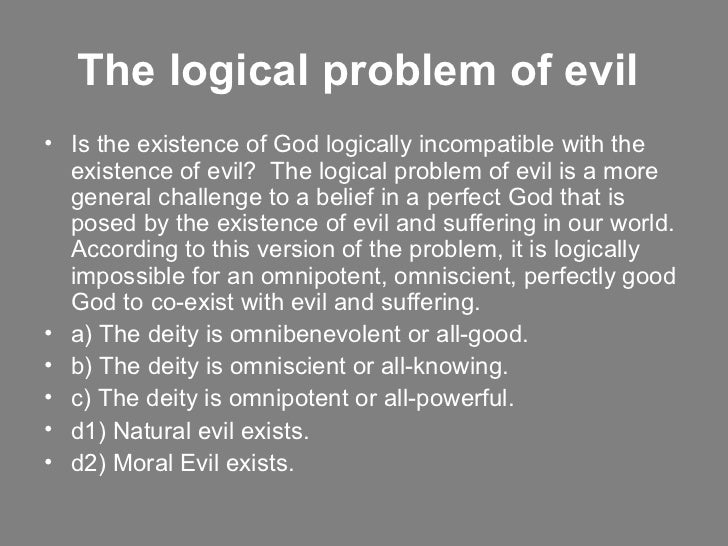
The Logical Problem Of Evil Why Is Dentalimplantsurgery Com Custom Academic Help

J L Mackie On The Logical Problem Of Evil Against The Existence Of God Youtube

Tied At The Hip The Logical And Evidential Versions Of The Problem Of Evil Problem Of Evil Atheist Evil World
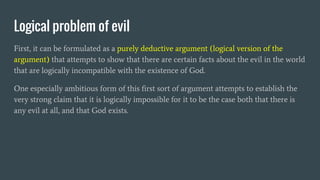
The Logical And Evidential Problem Of Evil 1

The Tree Of Logic Logic And Critical Thinking School Of Philosophy Critical Thinking
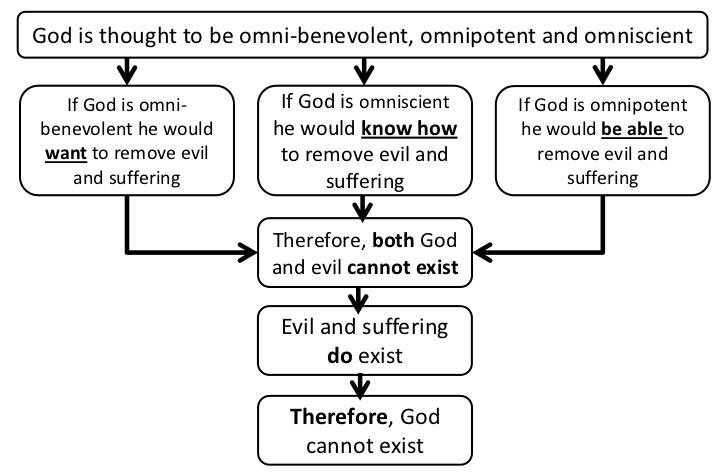
Mackie Summary Philosophy Dungeon

The Evidential Problem Of Evil Ppt Download

Proofs For The Existence Of God
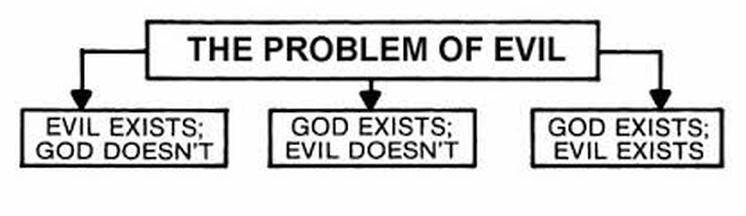
The Logical Problem Of Evil Why Is Dentalimplantsurgery Com Custom Academic Help
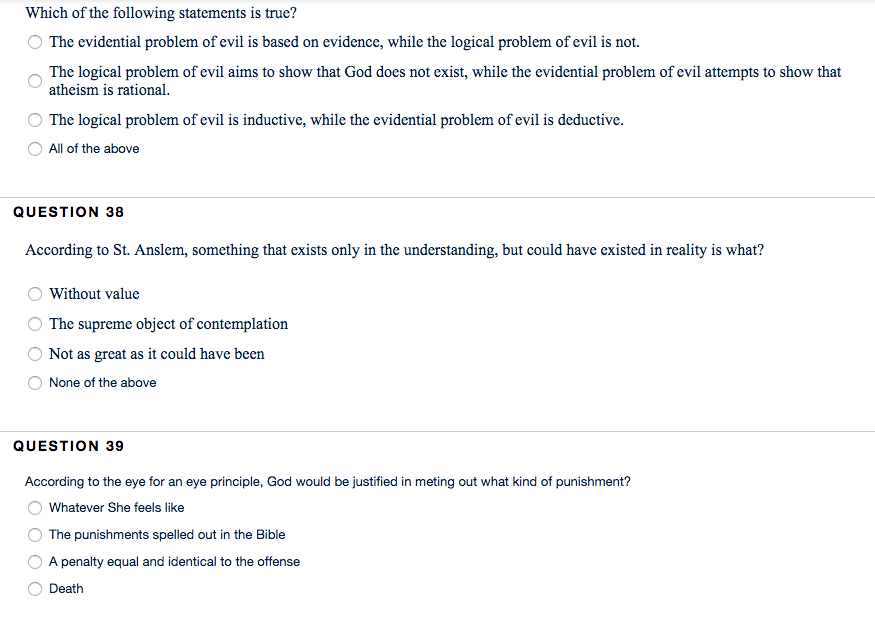
Solved Which Of The Following Statements Is True Evidence Chegg Com
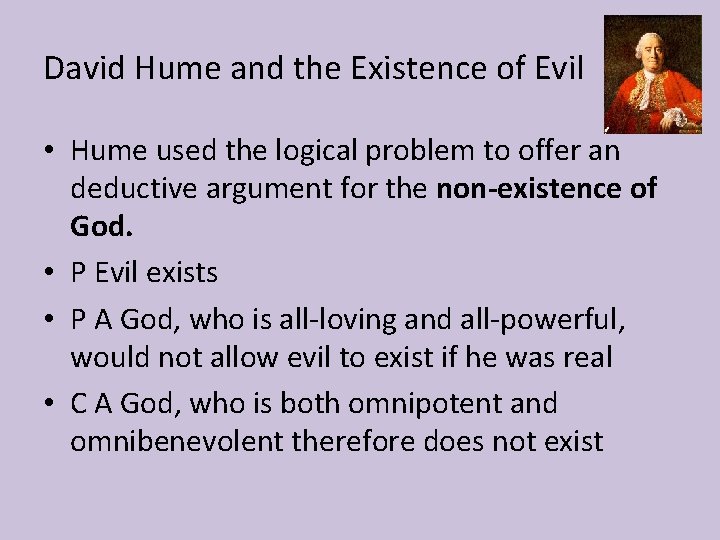
Evil And Suffering Edexcel As Level Evil Evil
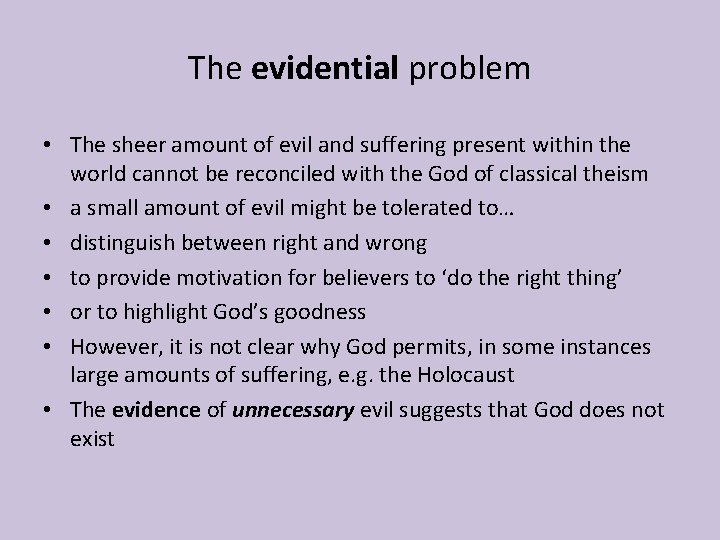
Evil And Suffering Edexcel As Level Evil Evil
The Logical Problem Of Evil

The Problem Of Evil The Logical Problem Epicurus Greek Philosopher Who Founded The Epicurean School Of Philosophy In Athens Epicurus Formulation Of Ppt Download


Comments
Post a Comment